
 EN
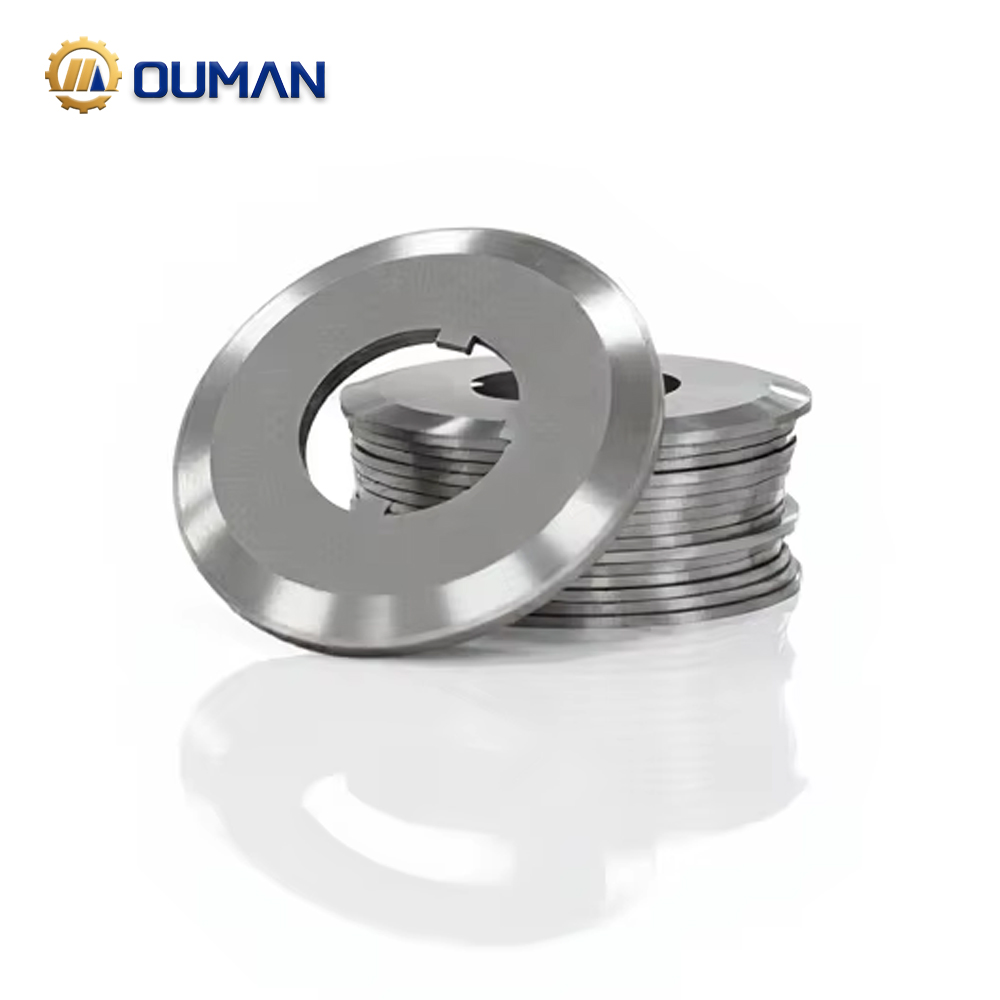
Cutting Performance: Why 440C Stainless Steel Blade Excels in Hardness and Edge Retention
HRC Scale and Microstructure: How 440C’s High Carbon Enables Superior Edge Holding
On the Rockwell Hardness C (HRC) scale, 440C stainless steel clearly outperforms 304. With 0.95–1.2% carbon, 440C undergoes martensitic transformation during heat treatment—producing a hard matrix densely populated with chromium carbides. Properly heat-treated 440C achieves 58–60 HRC, while 304, an austenitic alloy with only 0.08% carbon, remains near 70 HRB and cannot be hardened by quenching. These hard chromium carbides act as barriers to abrasive wear at the cutting apex, resisting plastic deformation and edge rolling far more effectively than 304’s softer, non-carbide structure. Though 304 can work-harden during cold forming, that effect is shallow, unstable, and insufficient for maintaining a precision cutting edge under repeated load. The carbon-driven hardness and carbide distribution in 440C are why edge-retention testing consistently favors it over 304—and over lower-carbon alternatives like 420 or 440A—in demanding cutting applications.
Wear Resistance in Practice: Chef’s Knives, Industrial Cutters, and Longevity Data
Wear resistance in real-world use directly reflects this microstructural advantage. Chef’s knives made from 440C hold a fine, acute edge significantly longer than those from 420 or 440A, reducing sharpening frequency and supporting consistent kitchen performance. In commercial bread slicers and industrial converting lines, 440C blades maintain dimensional stability and uniform cut quality over extended production runs—thanks to chromium carbides resisting abrasive wear under mechanical stress. Long-term service data from food processing and packaging facilities show 440C delivers longer intervals between blade changes compared to 304, especially in high-cycle or abrasive conditions. While 440C’s toughness decreases at the upper end of its hardness range—and chipping can occur if misused (e.g., twisting or prying)—proper edge geometry and application-specific grinding eliminate this risk. Where edge retention and repeatability drive operational cost, 440C remains the preferred martensitic stainless choice.
Corrosion Resistance: Where 304 Stainless Steel Blade Outperforms—and Its Critical Limitations
PREN Analysis and Real-World Exposure: Kitchen Salts, Humid Environments, and Sterilization Cycles
For corrosion-critical environments, 304 often surpasses 440C—not because it’s inherently “more stainless,” but due to higher available chromium and structural stability. The Pitting Resistance Equivalent Number (PREN = %Cr + 3.3 × %Mo + 16 × %N) quantifies this: 304 typically scores 18–20, while 440C’s high carbon ties up chromium in carbides, lowering free chromium and yielding a PREN closer to 12–14. In humid air, kitchen salts, or chloride-laden moisture, 304’s stable austenitic structure supports rapid, self-healing passive film formation. ASTM B117 salt-spray testing confirms this—304 withstands over 100 hours before red rust appears, whereas 440C may show pitting within 24–48 hours. Repeated autoclaving with chloride-containing steam also favors 304’s non-hardened, ductile matrix. But this corrosion resilience comes at a functional cost: 304 lacks the hardness and wear resistance needed for precision cutting. It remains best suited for low-impact, high-corrosion applications—like food-grade utility blades or marine hardware—where frequent resharpening or replacement is acceptable.
Composition & Trade-offs: Carbon, Chromium, and Nickel as Decision Drivers for Stainless Steel Blade Selection
Carbon Content (0.95–1.2% vs 0.08%) and Its Direct Impact on Hardenability and Toughness Balance
The carbon gap between 440C (0.95–1.20%) and 304 (≤0.08%) is the single most decisive compositional factor in blade selection. That carbon enables 440C to form martensite upon quenching—achieving 58–60 HRC and generating hard, wear-resistant chromium carbides. 304, with negligible carbon and an austenitic lattice, remains soft (70–90 HRB) and non-hardenable. Higher carbon dramatically improves edge retention for slicing and push cuts—but narrows the toughness window: thin 440C edges can chip under lateral shock, while 304 deforms elastically without fracture, even at minimal cross-sections. This trade-off is well documented in materials testing—440C’s secondary hardening during tempering extends edge life in repeat-cut trials, whereas 304 offers no such thermal response. Choose high carbon when controlled cutting performance is paramount; choose low carbon where impact absorption, bending resistance, or corrosion stability outweigh sharpness longevity.
Chromium and Nickel Roles: Passive Layer Formation vs. Austenitic Ductility—Why 304 Can’t Be Heat-Treated Like 440C
Chromium enables passivation in both alloys—but nickel dictates crystal structure and, therefore, hardenability. 304’s 18–20% chromium plus 8–10.5% nickel stabilizes face-centered cubic austenite at room temperature, delivering excellent ductility and corrosion resistance—but preventing martensitic transformation during heat treatment. 440C contains similar chromium (16–18%), yet its nickel is capped at 0.75%, leaving the structure martensitic-precipitable. Crucially, 440C’s carbon binds some chromium into inert carbides, slightly diminishing its free chromium for passivation versus 304—yet it still resists mild acids and ambient moisture reliably. Meanwhile, 304’s austenite remains unchanged through heating and quenching; it only work-hardens, never hardens. So while nickel enhances toughness and fabricability in 304, its presence actively prevents the hardening that defines 440C’s cutting capability. The two elements don’t compete—they enable fundamentally different functional profiles.
Application Matching: Choosing the Right Stainless Steel Blade by Use Case and Regulatory Context
Medical, Food Service, and Marine Applications: Functional Requirements vs Compliance Needs
Selecting between 440C and 304 demands weighing functional performance against environmental and regulatory constraints. In medical instrumentation—where repeated sterilization, fine-edge integrity, and tissue-cutting precision are critical—440C is widely specified for scalpels, biopsy tools, and surgical blades. Its ability to retain 56–60 HRC after autoclaving ensures predictable edge life across hundreds of cycles. Conversely, food service environments with heavy salt, acid, or humidity exposure—such as deli slicers or seafood prep stations—often prioritize 304 for its superior pitting resistance and NSF-compliant surface stability, even though it requires more frequent honing. Marine applications present a hybrid challenge: 304 resists atmospheric salt spray but suffers in crevices or stagnant seawater; 440C offers better edge life but demands careful passivation and maintenance to delay chloride-induced pitting. Critically, FDA and NSF compliance hinge not solely on alloy grade but on surface finish, fabrication cleanliness, and post-processing validation—meaning either material can meet regulatory standards if properly engineered. Ultimately, 440C serves high-wear, high-precision cutting; 304 serves corrosion-first, low-impact roles—each excelling where its composition aligns with real-world demands.
FAQ
1. What are the key differences between 304 and 440C stainless steel blades?
304 stainless steel is softer, corrosion-resistant, and non-hardenable, making it suitable for low-impact applications like utility blades. 440C stainless steel excels in hardness and edge retention, making it ideal for precision cutting.
2. Why is 440C better at edge retention?
The high carbon content in 440C creates a hard martensitic structure and dense chromium carbides, which resist abrasive wear and deformation.
3. Is 304 stainless steel more corrosion-resistant than 440C?
Yes, 304’s higher free chromium and nickel stabilize its passive film formation, offering better resistance in humid and chloride-rich environments.
4. Can 440C stainless steel withstand autoclaving?
Yes, it retains edge strength and hardness, making it suitable for medical tools despite its lower corrosion resistance compared to 304.
5. What is the typical hardness range for 440C?
Properly heat-treated 440C achieves a hardness range of 58–60 HRC.
Table of Contents
- Cutting Performance: Why 440C Stainless Steel Blade Excels in Hardness and Edge Retention
- Corrosion Resistance: Where 304 Stainless Steel Blade Outperforms—and Its Critical Limitations
- Composition & Trade-offs: Carbon, Chromium, and Nickel as Decision Drivers for Stainless Steel Blade Selection
- Application Matching: Choosing the Right Stainless Steel Blade by Use Case and Regulatory Context
- FAQ