
 EN
EN
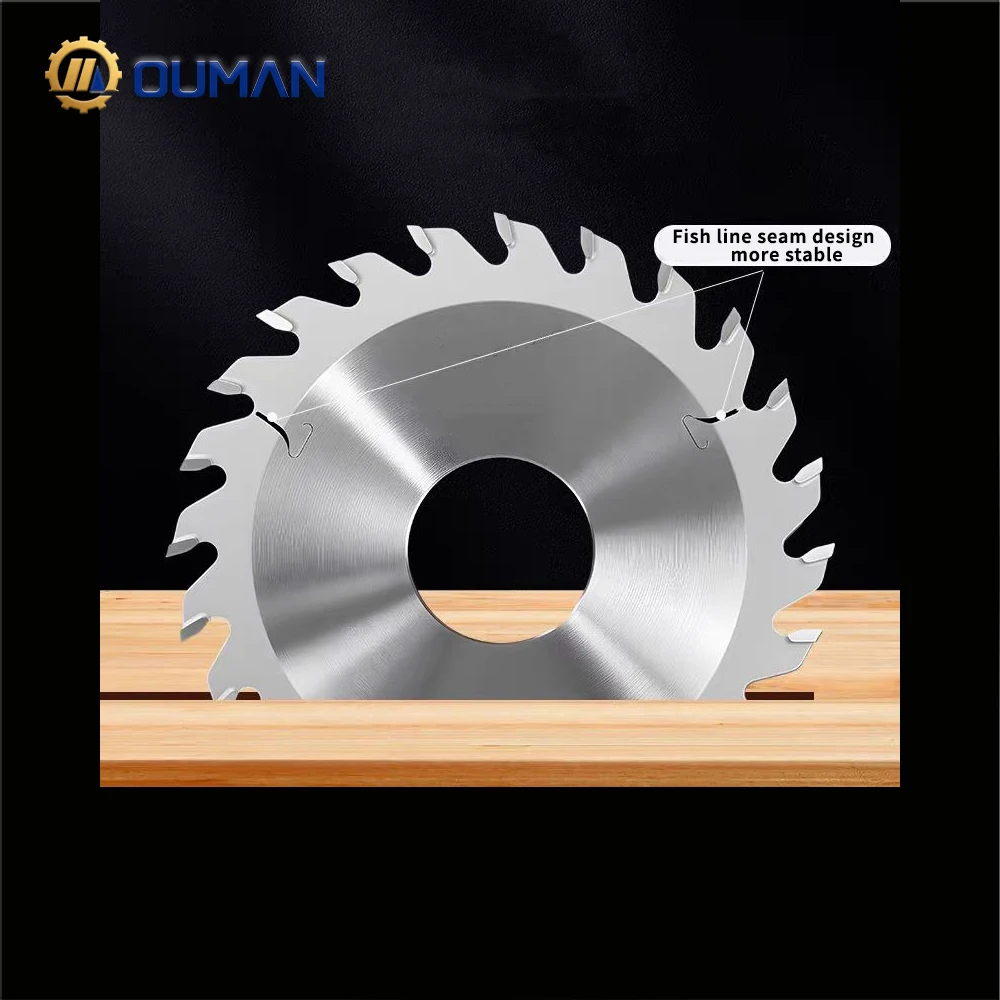
The 4 AM Production Stop – When a Standard Blade Failed
A structural steel fabricator in Birmingham was running a night shift on a critical bridge-girder contract. At 4 AM, a standard 14‑inch carbide saw blade fractured mid‑cut, embedding fragments in the workpiece and damaging the machine's arbor bearing. Production stopped for four hours. The replacement blade—identical to the failed one—was installed, but within 600 linear feet of cutting, it began to drift, producing out‑of‑tolerance slots that required manual rework. The root cause? The blade's tooth geometry and carbide grade were designed for general‑purpose structural steel, not the specific high‑strength low‑alloy (HSLA) steel specified in the contract.
This incident is not an outlier. Over the past six years, our manufacturing team has analysed blade performance across 95+ industrial facilities—including aerospace, automotive, and heavy fabrication. The consistent finding: standard saw blades, even from reputable brands, typically operate at only 60–75% of their theoretical capability when applied to a specific material–machine combination. Custom‑engineered blades close that gap—not by increasing the quality of the steel, but by aligning every design parameter with the actual cutting conditions. Understanding the case for custom blades isn't just about tooling—it is about protecting production schedules, reducing rework costs, and maintaining competitive edge.
OEM and ODM Partnerships – Engineering Blades for the Application, Not the Catalogue
In high‑volume production, one‑size‑fits‑all saw blades rarely deliver the precision, durability, and cost efficiency modern manufacturing demands. OEM (Original Equipment Manufacturer) and ODM (Original Design Manufacturer) partnerships close this gap by engineering blades to exact machine specifications, material characteristics, and cutting parameters—rather than forcing generic tools into mismatched applications.
Custom saw blades are designed from the ground up: blade body geometry, tooth configuration, and carbide grade are all aligned with feed rate, cutting speed, and even the machine's vibration profile. This eliminates compromises that drive excessive wear, poor chip evacuation, and unplanned downtime. The result is seamless integration, tighter tolerances, and longer uninterrupted runs. Optimised geometry alone can reduce cutting forces by up to 20%, lowering energy use and heat generation. Facilities adopting custom designs commonly report a 30% reduction in blade‑changeover downtime. Through OEM/ODM collaboration, saw blades evolve from interchangeable consumables into strategic assets that boost throughput and cut scrap rates.
Material Compatibility and Geometry – The Foundation of Peak Performance
Saw blade performance hinges on the precise synergy between carbide composition and tooth geometry. Selecting the right carbide grade—balancing hardness, toughness, and wear resistance—is essential when cutting abrasive or high‑strength materials.
| Material Type | Recommended Carbide Grade | Cobalt Content | Key Coating | Primary Challenge |
|---|---|---|---|---|
| Titanium / Aerospace Alloys | Submicron grain | 6–10% | TiAlN / AlTiN | Edge retention at high temperatures |
| Solid Wood / Nail‑Embedded Lumber | Coarse grain | 10–15% | Uncoated or PTFE | Impact resistance; chipping |
| Abrasive Composites | Fine grain, high hardness | 3–6% | Diamond or PCD | Wear resistance |
| Structural Steel (HSLA) | Medium grain | 8–12% | TiN or TiAlN | Balance of toughness and wear |
For titanium machining, a submicron grain carbide with 6–10% cobalt binder delivers superior edge retention; for interrupted cuts in solid wood or nail‑embedded lumber, a tougher grade with 10–15% cobalt resists chipping. Coatings like TiAlN further suppress friction and thermal buildup.
Tooth geometry—including hook angle, pitch, gullet depth, and side clearance—is then fine‑tuned to the workpiece: a low positive hook angle minimises deflection in thin‑walled tubing; variable pitch reduces harmonic vibration in structural alloys. Together, these adjustments suppress heat accumulation, burr formation, and work hardening. In an aerospace titanium application we documented, a custom blade featuring optimised geometry and carbide grade extended tool life by 42%—a gain rooted in applied material science and mechanical design, not incremental improvement.
The Custom Design Process – From Requirements to Production‑Ready Blade
Assessing Cutting Conditions and Translating to CAD Specifications
Custom design begins with a rigorous assessment of the application: material type and thickness, machine RPM and feed rate, required surface finish, and production volume. Engineers convert these inputs into precise technical parameters within CAD software—defining blade diameter, arbor size, kerf width, tooth count, pitch, and hook angle. A blade for ripping hardwood differs fundamentally from one engineered for cross‑cutting thin aluminium sheet, and CAD modelling validates chip flow, gullet capacity, and clearance before physical prototyping. Simulations help anticipate binding, vibration, or heat concentration—enabling preemptive refinement. Once approved, the 3D model becomes the manufacturing blueprint, ensuring dimensional fidelity and repeatability across production batches. This data‑driven foundation guarantees consistent, reliable performance from the first cut—reducing trial‑and‑error, scrap, and unplanned stops.
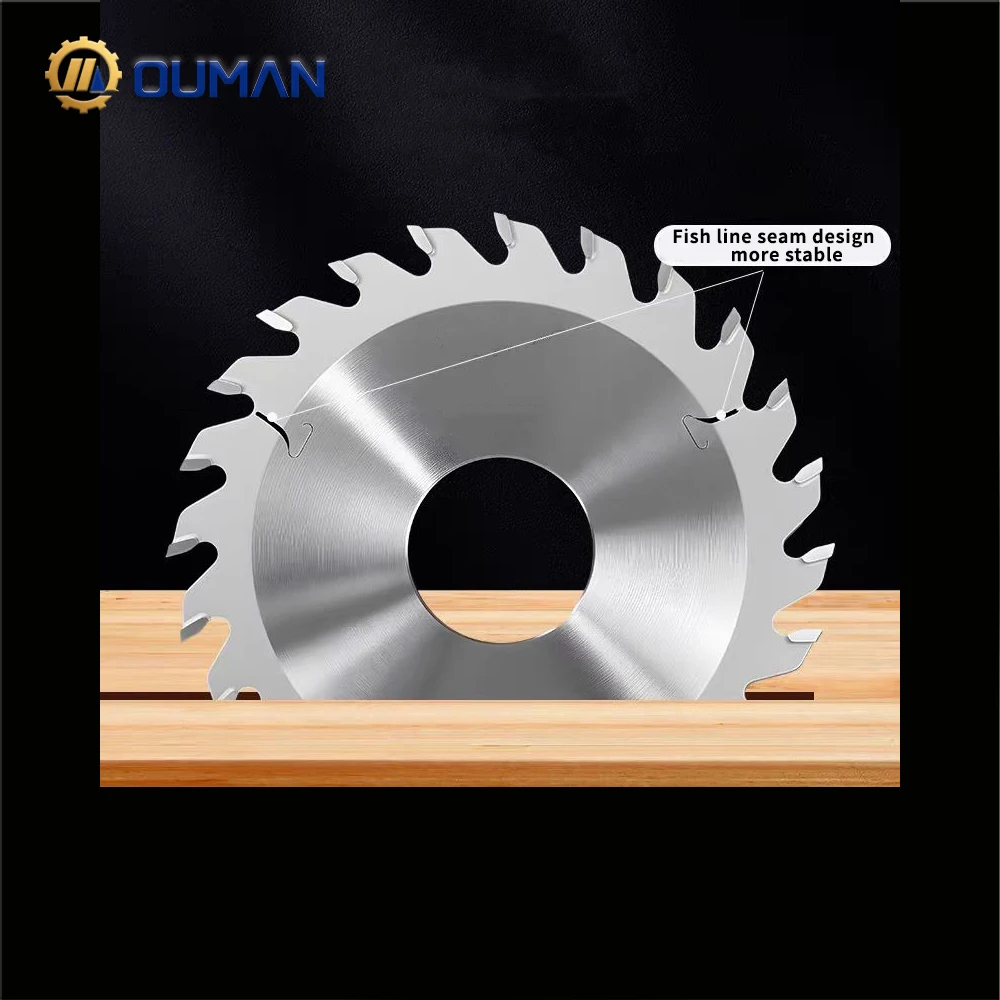
Carbide Grade Selection – Balancing Hardness, Toughness, and Wear Resistance
Carbide grade selection directly determines blade longevity and reliability. Tungsten carbide particles bonded with cobalt form the cutting edge—and the grain size and cobalt content govern its behaviour: fine submicron grain delivers hardness and wear resistance; coarser grain with higher cobalt (10–15%) enhances impact resistance for interrupted cuts. Abrasive composites demand high‑hardness, low‑cobalt grades (3–6%), while tough, ductile materials require greater toughness. Industry specialists often specify micro‑grain grades like K10 or K20 for balanced performance across diverse applications. TiAlN and AlTiN coatings add another layer of protection in high‑heat environments. When matched precisely to the workpiece and process conditions, optimised carbide selection extends tool life by 30–50% over off‑the‑shelf alternatives—without sacrificing surface quality or dimensional accuracy.
CNC Grinding and Sharpening – Achieving Micron‑Level Precision
After blanking and brazing, custom saw blades undergo multi‑axis CNC grinding—a non‑negotiable step for high‑speed, automated production. Servo‑controlled machines grind each tooth face and flank to tolerances as tight as ±0.002 mm, far exceeding manual capability. Coolant delivery maintains thermal stability during grinding, preventing micro‑cracking; in‑process probing verifies geometry, triggering automatic corrections for any deviation. This level of precision yields consistently sharp, geometrically uniform edges—reducing cutting force, improving surface finish, and minimising heat generation. For high‑volume lines where consistency is mission‑critical, such accuracy ensures stable performance across thousands of cuts, extending time between tool changes and preserving part quality without operator intervention.
The Business Case – Measurable Benefits in Real Production Environments
In demanding production settings, the shift from standard to application‑specific saw blades yields tangible, bottom‑line results.
| Performance Metric | Standard Blade | Custom‑Engineered Blade | Improvement |
|---|---|---|---|
| Tool Life (cuts per blade) | ~200 | ~284 | +42% |
| Changeover Downtime (hours/year) | Baseline | 30% reduction | ~60 hours saved |
| Tooling Cost per Part | Baseline | 15% reduction | Direct cost saving |
| Regrind Performance | 70% of original | 90% of original | Extended total life |
| Secondary Deburring | Required | Eliminated | Labour saving |
Case Study: 42% Extended Tool Life for Aerospace Titanium Machining
A leading aerospace component manufacturer struggled with premature blade failure cutting titanium alloy billets—standard carbide blades lasted only approximately 200 linear cuts, causing frequent downtime and inconsistent part quality. Partnering with a specialised blade engineering team, they deployed a custom carbide‑tipped saw blade featuring variable tooth pitch, high‑positive rake geometry, and a multi‑layer AlTiN coating.
In a verified 2024 production trial, tool life increased by 42%—to 284 cuts per blade. This translated to a 15% reduction in tooling cost per part and saved an estimated 60 hours of annual machine downtime. Crucially, the blade's durability supported multiple regrinds—restoring 90% of original performance at roughly 30% of replacement cost—cutting waste and extending total cost‑of‑ownership benefits. Consistent cut quality also eliminated secondary deburring, raising throughput and part acceptance rates. The investment paid for itself within the first quarter—demonstrating how purpose‑built tooling transforms a routine consumable into a measurable competitive advantage.
Engineering Partnership – What G‑Honor Games Brings to the Table
Achieving the performance gains described above requires more than ordering a custom blade from a catalogue—it demands a partnership with a manufacturer that controls the entire engineering chain from material selection to final grinding. G‑Honor Games brings this engineering‑first philosophy to custom saw blade manufacturing. Our production facilities implement controlled‑atmosphere brazing, precision CNC grinding systems, and multi‑point hardness validation (HRC) to ensure every blade meets its specified geometry and performance targets. We offer customised carbide grades—from micro‑grain K10 to high‑toughness K20 variants—and apply coatings including TiAlN, AlTiN, and PTFE anti‑stick options tailored to your specific cutting environment. Our engineering team collaborates directly with clients during the CAD and prototyping phases, ensuring that tooth geometry, gullet capacity, and clearance angles are optimised for your machine and material. Our integrated supply chain ensures consistent material sourcing and documented traceability for every batch. For production managers and facility engineers, this translates to predictable tool life, fewer unplanned stops, and a measurable reduction in cost per cut.
FAQ
Q: What are the key benefits of custom saw blades compared to standard options?
A: Custom blades deliver precision, durability, reduced downtime, and improved cost efficiency by aligning geometry, carbide grade, and coatings with specific material–machine combinations.
Q: What factors determine the performance of a custom saw blade?
A: Key factors include carbide grade (grain size and cobalt content), tooth geometry (hook angle, pitch, gullet depth), coatings, and machine parameters like RPM and feed rate.
Q: How does custom blade design improve material compatibility?
A: By matching carbide grade and tooth configurations to the specific material—whether abrasive composites, high‑strength alloys, or nail‑embedded lumber—custom blades cut more efficiently and last longer.
Q: What is the typical design and production timeline for custom saw blades?
A: The process typically spans 4–8 weeks, including application assessment, CAD modelling, prototyping, and CNC grinding, depending on complexity.
Q: Can custom blades reduce unplanned downtime?
A: Yes. Custom blades optimised for the application experience 30–50% longer tool life and fewer failures, directly reducing machine stoppages and changeover time.
Q: Are custom saw blades cost‑effective for smaller production volumes?
A: For high‑volume or high‑value production, the ROI is clear. For smaller runs, the cost‑benefit depends on the material and quality requirements—consultation with an engineering team can clarify the break‑even point.