
 EN
EN
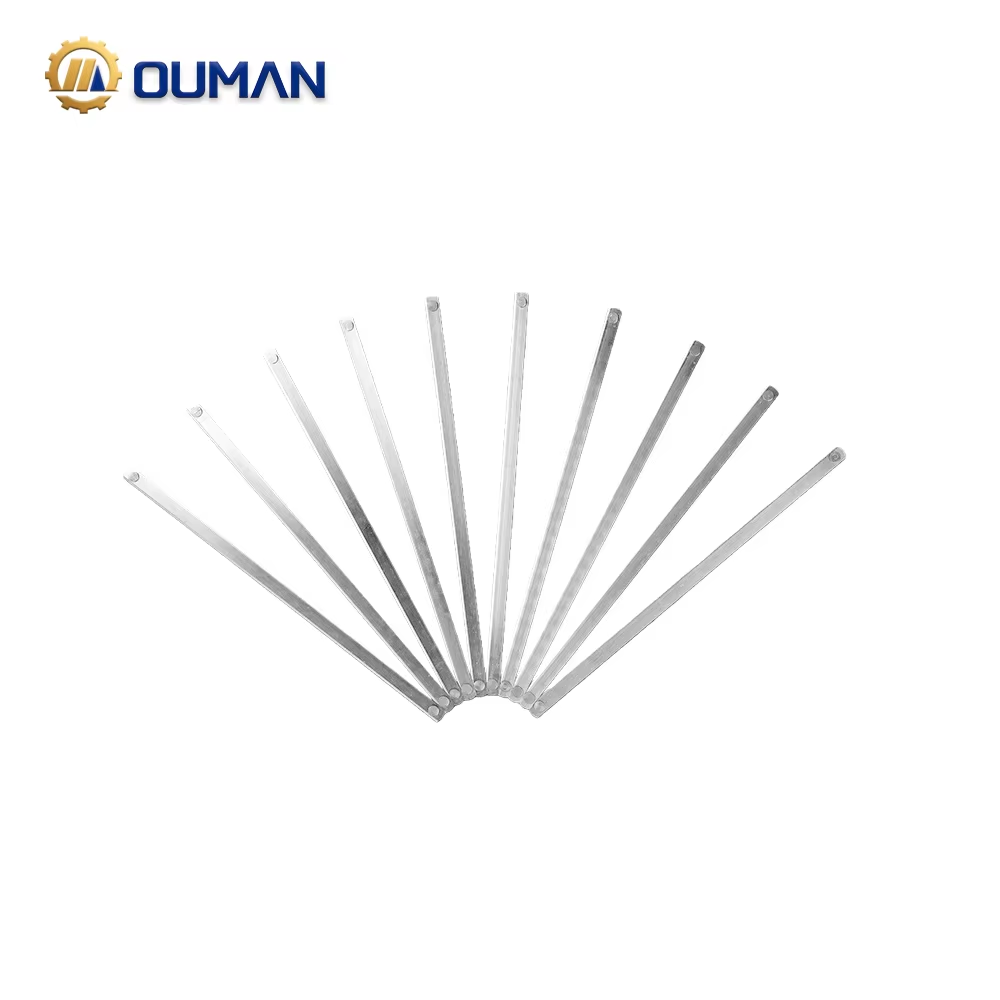
The Leading Consumer of Stainless Steel Blades: Food and Beverage Processing
Food and beverage processing is the biggest consumer of stainless steel blades, making up over 70% of all industrial blade uses (International Stainless Steel Forum 2023). This is due to the ability of stainless steel to fulfill the stringent demands of food processing related to hygiene and cutting capability.
FDA Sanitation Standards and Stainless Steel Blades
Corrosion resistant stainless steel blades assist in the fulfillment of sanitation regulations established by the FDA. Stainless steel 316L, for example, remains intact and unadulterated by the elements of some food and the chemicals used to clean the processing equipment. Its structure, combined with the absence of a porous surface, simplifies the adhesion of bacteria and, therefore, validates the cleaning. Its structure also remains intact after repeated steam sterilizations.
Main Applications: Meat Slicing, Packaging, and Conveyor Systems
Three main applications account for the majority of the demand of stainless steel blades in food processing:
Meat slicers that require edge retention at high speeds
Packers that require blades that are sharp enough to cut through fibrous or laminated materials

Conveyor blade systems that have been designed to resist microbial build up
These applications take advantage of the unique combination of the hardness (HRC 56-60) and corrosion resistance of stainless steel. These properties also decrease the downtime of the components required to be cleaned and can be several times the service life of the carbon steel first choice blades. (Materials Performance Journal 2023).
Medical Device Manufacturing: The Need for Precision and Sterility Means Premium Stainless Steel Blades
Instruments Such as Scalpels, Biopsy Punches, and Surgical Tools Use Stainless Steel Blades That Retain an Edge
Each surgical tool used to make an incision requires a blade that is sharp enough to maintain the geometry of the edge for the duration of the task. Blades used for scalpels, surgical punches, and micro-dissection tools utilize stainless steel that provides a good balance of hardness and resistance to corrosion. These blades endure repeated cycles of the sterilization process without deterioration in sharpness and without pitting or leaching. Retention of sharpness is critical because dulling of the blade during a procedure can lead to poor incisions and increase the risk during the operation. High-carbon martensitic alloys combined with precision grinding are consistently chosen by manufacturers. The result is a blade with a non-porous, burr-free edge that will not support a bacterial infection, thereby meeting the standards set by the FDA and ISO 13485 for sterilization. The stainless steel blade is not a surgical tool in this case, but a device that can help save a life.
FDA-Compliant Martensitic Grades (440A–440C) for Manufacturing Stainless Steel Blades
Blades in the medical field are typically made from stainless steel in the martensitic phase. The 440 series (440A, 440B, 440C) are selected based on their biocompatibility and the strength and sterilization of the steel. The 440 series has chromium in the range of 16-18 percent with the addition of 0.6-1.1 percent carbon which aids the steel to be harden throughout (to Rockwell C 58-60). 440C is the most wear resistant for disposable scalpels (single-use) whereas 440A is the most corrosion resistant and toughest for scalpels that are reusable (multipurpose). The heat treatment of the 440 series is carefully monitored to limit the precipitation of carbides at the boundaries of the grains. After hardening, the 440 series is subjected to a cryogenic treatment and several steps in the tempering process to relieve stress and stabilize the microstructure. The production lot is sampled to test the metrics of hardness, edge retention, and measurements to ensure the lot is in compliance with the requirements of the ISO 13485 and the FDA 21 CFR Part 820.
Pharmaceutical Manufacturing: Stainless Steel Blades for Aseptic Application
Stainless Steel Blades that go from granular to milled and coated for use for tablets
Stainless steel blades are made for the processes that are part of the manufacture of tablets in the pharmaceutical industry (e.g. final granulation, milling, and coating). The processes and the pharmaceutical active ingredients in the formulation and the excipients rely on the integrity of the blade to keep the size of the particles consistent and the coating uniform in order for the medication to be safe and effective. These blades must stand wear resistant from abrasive ingredients while remaining chemically inert and non-shedding. 316L stainless steel and custom high grade martensitic steel provide the wear resistant blades needed that also ensure sterile conditions. Blades that are lower in alloy do not corrode and do not flake to provide assurance that there will no metallic contamination which protects quality
Industrial and Material Handling Applications: High-Performance Stainless Steel Blades Beyond Hygiene
Though stainless steel blades are key to hygiene-critical industries, their utility spans heavily to even the most demanding industrial and material handling environments. For recycling, metallurgy, and bulk processing, blades are needed to perform shredding, cutting to size, deburring and finishing, and work with rubber, plastics, textiles, and even thin sheet metals. For these applications, grades of stainless steel like 440A–440C, which are martensitic, provide an excellent retention of hardness and toughness to fracture in abrasive environments that are demanding and high cyclic. This combination of durability is easily translated to unplanned downtime that is less frequent, a total ownership cost that is lower, and operational efficiency that is constant. Stainless steel blades show versatility beyond sanitary applications.
Frequently asked questions
Why are stainless steel blades crucial in food processing? Stainless steel blades remain the best choice for food processing because of their durability and corrosion resistance. Their service life can also meet the most stringent non-hygienic FDA standards.
Why are martensitic grades preferred in medical devices? Martensitic grades like 440A and 440C have high hardness and edge retention. They are also biocompatible which makes them perfect for high precision surgical instruments, and are also resistant to sterilization.
In what way do stainless steel blades improve pharmaceutical production? Stainless steel blades inhibit surface wear and resist chemical activity while remaining clean, which help preserve the integrity of the drug during the granulation, milling, and coating processes.
Outside hygiene-critical industries, where else can stainless steel blades be used? Stainless steel blades are particularly suitable for the most demanding industrial applications like recycling, metallurgy, and material handling, because of their durability and resistance to the most highly demanding environments.