
 EN
EN
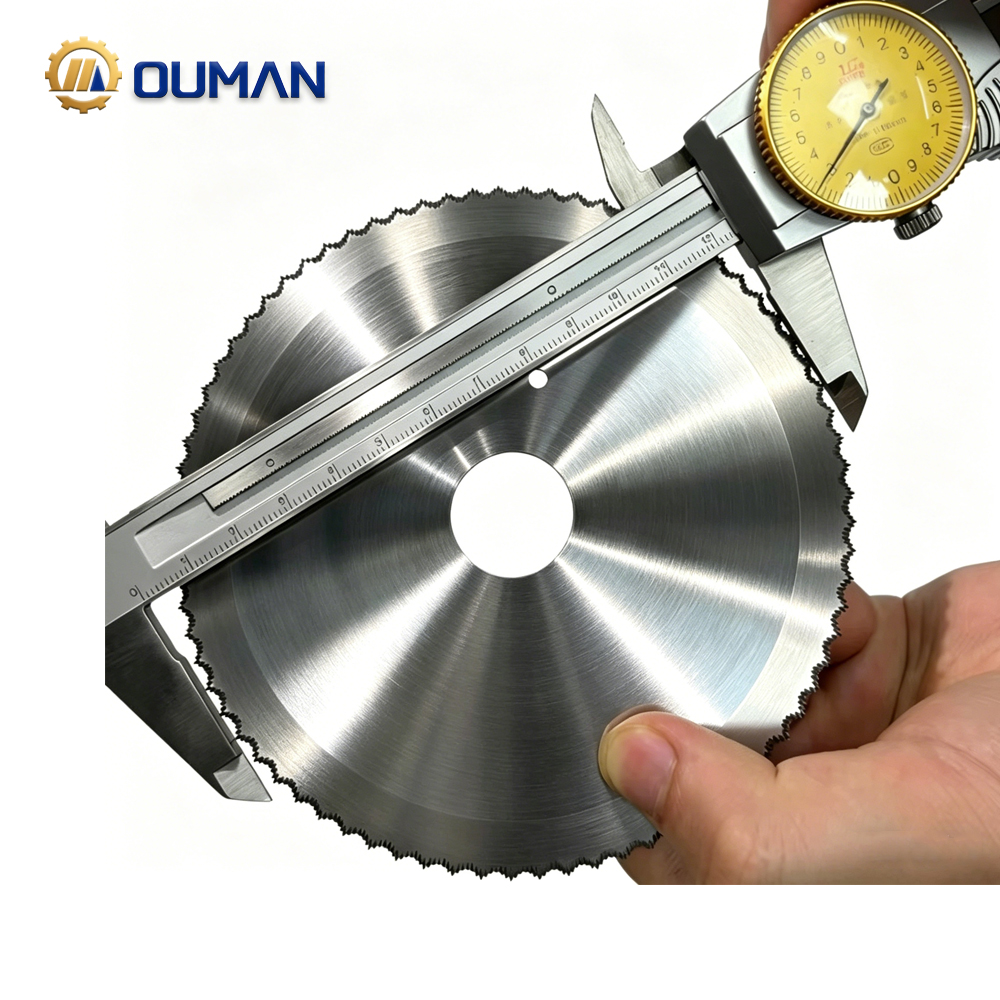
Coated cutting blades are a staple of high-efficiency industrial manufacturing, addressing two core pain points for production teams: frequent blade replacement and downtime from premature edge wear. By depositing specialized protective layers onto steel substrates, blade coatings enhance hardness, reduce friction, and resist corrosion — directly extending service life and improving cut consistency.
This guide breaks down the performance mechanisms of coated cutting blades, compares the most common coating types, and shares maintenance best practices to help you select the right finish for your application and lower total tooling costs.
1. Cutting Performance: How Coatings Boost Edge Life & Precision
Two core mechanisms drive the performance advantage of coated blades over uncoated alternatives: surface hardening for improved edge retention, and friction reduction for smoother, faster cutting.
1.1 Micro-Edge Retention & Surface Hardening Mechanism
Cutting edges degrade over time through three primary failure modes: abrasive wear, micro-chipping, and plastic deformation. Without protection, even high-quality steel blades will round or roll at the micro-edge after repeated cutting cycles, losing sharpness and producing inconsistent cut quality.
Physical Vapor Deposition (PVD) coatings — most commonly titanium nitride (TiN) and chromium nitride (CrN) — solve this by depositing a thin, ultra-hard ceramic layer onto the steel substrate. This layer dramatically elevates surface hardness far beyond the base material:
- Standard high-speed steel typically measures 700–800 HV (Vickers Hardness)
- A PVD TiN coating raises contact-zone hardness to 2,000–2,500 HV
The hardened micro-edge resists deformation under repeated cutting loads, slowing micro-crack propagation and delaying early edge degradation. As confirmed by Zhang et al. (2023), surface hardness is the dominant factor in edge retention. For high-throughput industrial settings, this translates to consistent cut quality over longer production runs and fewer unplanned blade changes.
1.2 Friction Reduction & Measurable Efficiency Gains in Industrial Use
Beyond hardness, coatings lower the coefficient of friction between the blade edge and workpiece material. Less friction means less heat generation, less material adhesion, and lower cutting force required for each cut — all of which translate directly into operational savings.
Real-world industrial slitting tests demonstrate measurable efficiency gains:
- Blades with a 15-µm edge radius required 10% less cutting force than 5-µm radius equivalents
- A 30-µm edge radius further reduced drag, increasing production line speed by 18%
- Overall machine power consumption dropped by up to 12% with optimized coated blades
- Blade replacement frequency fell by 20–30% across high-volume packaging lines
One commercial packaging facility reported a 30% line speed increase after switching to 25-µm edge-radius coated blades, driven entirely by reduced material drag and adhesion. For automated die cutting, food slicing, and converting operations, this makes coated blades a proven lever for boosting throughput without additional equipment investment.
Corrosion and abrasive wear are the leading causes of premature blade failure, especially in humid, saline, or chemically aggressive environments such as food processing, marine manufacturing, and outdoor utility equipment.
Blade coatings act as electrochemical barriers, physically isolating the steel substrate from moisture, salts, and corrosive agents. They also serve as sacrificial wear layers, protecting the base steel from abrasive particles that would otherwise scratch and weaken the edge.
2.1 Electrochemical Barrier Function of PVD & Black Oxide Coatings
PVD coatings (TiN and CrN) form dense, chemically inert layers that impede ion transfer between the environment and the steel substrate, significantly slowing oxidation and rust formation. Industrial wear testing shows TiN-coated blades reduce total wear by up to 45% compared to uncoated tools.
Black oxide, a chemical conversion coating, produces a thin magnetite (Fe₃O₄) layer 0.5–2 µm thick. Rather than forming a full physical barrier, the porous magnetite layer absorbs and retains protective oils, delivering reliable corrosion resistance without altering blade dimensions.
Both coating types deliver two key reliability benefits:
- They prevent micro-scratches that would otherwise initiate corrosion cells on the blade surface
- They suppress galvanic corrosion in multi-metal assemblies, a common failure mode in integrated cutting systems
By preserving surface integrity under continuous exposure to moisture or mild acids, these coatings support long-term, low-maintenance reliability for demanding applications.
3. Blade Coating Types Compared: Cost, Durability & Best Use Cases
Selecting the optimal blade coating requires balancing performance requirements, operating environment, and budget. Below is a side-by-side comparison of the three most common industrial blade finishes, along with their ideal applications.
表格
| Coating Type | Core Advantage | Typical Thickness | Best For | Key Limitation |
|---|---|---|---|---|
| Black Oxide | Low cost, zero dimensional change | 0.5–1.5 µm | Low-volume parts, surgical blades, precision utility knives | Low wear resistance; requires reapplication |
| PVD (TiN / CrN) | Extreme hardness, long wear life | 2–5 µm | High-cycle industrial cutting, die cutting, food processing | Higher upfront cost; requires post-coating honing for ultra-fine edges |
| Stonewash | Anti-glare, improved grip | N/A (surface texture only) | Outdoor utility blades, rescue tools, construction cutters | No hardness or corrosion protection on its own |
3.1 Black Oxide: Budget-Friendly Corrosion Resistance With Zero Dimensional Change
Black oxide is a low-cost chemical conversion process that adds just 0.5–1.5 microns of thickness, preserving the tight dimensional tolerances critical for surgical instruments and precision utility blades.
Lab testing (2023) shows black oxide reduces surface oxidation by up to 40% in high-humidity environments. Unlike plated coatings, it will not peel or chip, eliminating the risk of edge contamination from flaking coating material.
Its primary drawback is limited wear resistance: the thin magnetite layer abrades away under repeated cutting, requiring periodic reapplication or more frequent sharpening. For high-volume, low-cost applications where moderate corrosion protection is sufficient, black oxide remains a practical first-line defense. It also works well as an oil-retention base layer paired with other coatings.
3.2 PVD Coatings (TiN, CrN): Maximum Wear Resistance for High-Cycle Operations
PVD coatings deposit ultra-hard ceramic layers (TiN or CrN) that dramatically extend edge life, with surface hardness exceeding 2,500 HV and friction coefficients 30–50% lower than uncoated steel. Blades with PVD finishes can complete tens of thousands of cutting cycles before significant edge degradation.
In controlled 2024 industrial testing, a CrN-coated industrial shear blade delivered three times the edge retention of its uncoated counterpart when slicing highly abrasive materials.
Tradeoffs of PVD coatings include:
- Higher upfront cost: $0.50–$2.00 per blade at production scale
- Vacuum-based processing with longer lead times
- 2–5 µm thickness variation that may require post-coating honing for ultra-fine edges
For high-cycle applications such as die cutting, food slicing, and automated packaging, the investment pays back quickly through reduced downtime and lower total ownership cost. TiN’s distinctive gold hue and CrN’s silvery finish also serve as visual wear indicators, making it easy to identify when recoating is needed.
3.3 Stonewash Finish: Glare Reduction & Improved Tactile Grip for Utility Blades
Stonewash is a mechanical finishing process that uses abrasive tumbling to produce a matte, non-reflective surface. It is ideal for outdoor and high-glare work environments, where reflected light can cause visual distraction during rescue, construction, or field work.
The slightly textured surface also enhances grip and tactile feedback, which is particularly valuable for wet or gloved operating conditions. While stonewash adds no hardness or corrosion resistance on its own, it masks minor scratches and preserves a clean appearance over time.
As a low-cost secondary finish, it is frequently paired with black oxide or PVD coatings to balance user comfort, aesthetics, and functional longevity.
4. Maintenance, Limitations & Real-World Service Life
Even the most advanced blade coatings will underperform without disciplined maintenance. Proper care not only extends service life but also ensures consistent cut quality over time.
4.1 Best Practices to Maximize Coated Blade Lifespan
Follow these maintenance protocols to get the longest usable life from coated cutting blades:
- Preventive cleaning after each shift: Remove abrasive swarf and chemical residues that would otherwise accelerate coating wear
- Routine magnified inspections: Detect early coating cracks or flaking before they spread and cause catastrophic edge failure
- Proper storage: Keep blades in dry, temperature-controlled environments to prevent moisture-induced corrosion, even for robust PVD layers
- Correct alignment & feed rates: Misaligned blades and excessive feed speeds cause uneven wear and overheating that damage coating integrity
When operators follow strict cleaning, alignment, and usage protocols, real-world data shows coated blade life increases by 30–50%, cutting downtime and lowering long-term tooling expenditure.
4.2 Key Limitations & When to Replace or Recoat Blades
Coating protection is not indefinite. There are three common scenarios where coating performance will degrade rapidly:
- Highly abrasive materials: Cutting fiberglass-reinforced composites, hardened alloy steels, or mineral-filled materials will wear the coating thin over time, eventually exposing the base steel substrate. Once the coating is breached, edge degradation accelerates dramatically.
- Overheating damage: Excessive feed rates or inadequate lubrication can generate enough heat to soften or oxidize the coating, permanently reducing its hardness and protective properties.
- Physical impact damage: Heavy shock or misalignment can cause micro-chipping or delamination of the coating layer.
In all three cases, timely reconditioning or blade replacement is essential to avoid declining cut quality and unexpected production downtime.
5. Frequently Asked Questions About Coated Cutting Blades
What are the most common types of blade coatings?
The most widely used industrial blade coatings are titanium nitride (TiN), chromium nitride (CrN), black oxide, and stonewash finishes. Each is selected based on specific performance requirements, including wear resistance, corrosion protection, dimensional tolerance, and aesthetic needs.
How do coatings improve cutting blade longevity?
Coatings extend blade life through three core mechanisms: increasing surface hardness to resist deformation, reducing friction to minimize abrasive wear, and forming a barrier to block corrosion. Together, these protective layers allow blades to maintain precision and sharpness over far more cutting cycles than uncoated equivalents.
What factors should I consider when selecting a blade coating?
Evaluate your cutting application, operating environment, budget, and required durability. For high-cycle, high-volume production, PVD coatings like TiN or CrN deliver superior wear resistance. For precision parts on a budget, black oxide provides cost-effective corrosion protection with minimal dimensional impact. For outdoor utility use, stonewash adds functional ergonomic benefits.
Do coated blades require maintenance?
Yes. Regular cleaning, periodic inspections, and proper dry storage are required to retain maximum coating performance. Coatings will naturally degrade over time with use, so timely recoating or blade replacement is necessary to sustain performance.
Can coating types impact operational costs?
Absolutely. Coating types directly affect operational costs by reducing unplanned downtime, lowering machine power consumption, and decreasing blade replacement frequency. While advanced coatings like PVD require a higher initial investment, they almost always deliver net long-term savings for high-volume operations.
Final Takeaway
The right blade coating is a high-ROI investment for any industrial cutting operation. For high-throughput production, PVD coatings (TiN/CrN) deliver unmatched wear resistance and efficiency gains. For budget-focused precision applications, black oxide provides reliable corrosion protection at a low cost. And for field-use utility blades, stonewash adds tangible safety and ergonomic value.
Ultimately, the longest service life and lowest total cost come from matching the coating to your specific application — and following consistent maintenance practices to protect your investment.
Table of Contents
- 1. Cutting Performance: How Coatings Boost Edge Life & Precision
- 2. Corrosion & Wear Protection: Reliability for Harsh Environments
- 3. Blade Coating Types Compared: Cost, Durability & Best Use Cases
- 4. Maintenance, Limitations & Real-World Service Life
- 5. Frequently Asked Questions About Coated Cutting Blades
- Final Takeaway