
 EN
EN
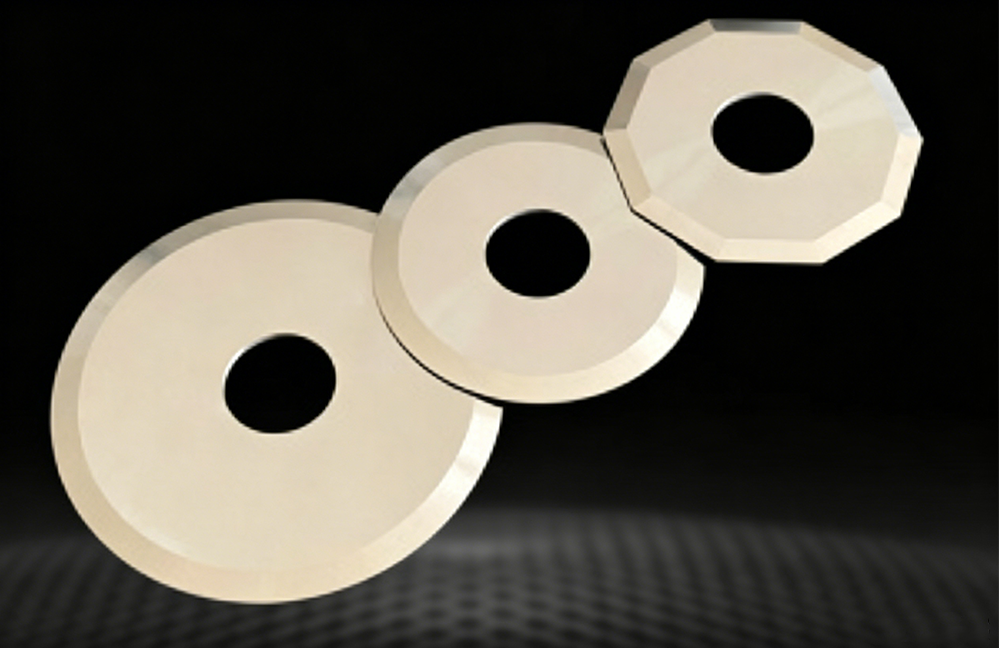
The Engineering Guide to Precision-Ground Industrial Blades
In modern high-speed manufacturing, converting, food processing, and packaging operations, an industrial machine knife is far more than a simple piece of sharpened steel. It is a precision-engineered tool that functions under intense thermal, mechanical, and physical stresses.
While raw material selection—such as choosing between martensitic stainless steel, high-speed steel, tool steel, or solid tungsten carbide—sets the foundation for blade performance, the grinding process determines whether a blade will perform reliably over millions of operational cycles.
Precision grinding goes beyond basic sharpening. It is a digitally controlled, micron-level manufacturing methodology that transforms raw, heat-treated steel into a highly stable, durable, and dimensionally perfect cutting instrument.
1. Defining Precision Grinding: Beyond Basic Edge Sharpening
To understand why precision grinding is critical, one must first distinguish it from conventional off-hand or manual tool room grinding.
Conventional grinding typically focuses on one outcome: creating a visibly sharp edge. However, manual or non-CNC grinding methods introduce variability in cutting angles, leave rough surface finishes, and cause localized thermal damage (often known as grinding burns). These microscopic imperfections compromise the blade before it ever touches a production line.
The Micron-Level Standard
Precision grinding relies on multi-axis CNC (Computer Numerical Control) machinery utilizing diamond or Cubic Boron Nitride (CBN) grinding wheels. Instead of relying on manual operator feel, the system controls feed rates, wheel speeds, coolant delivery, and toolpaths to microscopic tolerances:
-
Edge Profile Accuracy: Maintaining contour deviations below 0.005 millimeters.
-
Surface Roughness: Achieving mirror-like finishes measured in fractions of a micron (surface roughness Ra values under 0.2 microns).
-
Dimensional Consistency: Ensuring thickness, parallelism, and inner/outer diameter tolerances remain within strict, predictable limits across massive production runs.
2. Microstructural Mechanics: What Happens at the Cutting Edge
When steel is ground, the grinding wheel removes material through a combination of micro-cutting, plowing, and rubbing. On a microscopic level, a precision-ground edge looks fundamentally different from a conventionally ground one.
Conventional Grinding Impact
Leaves micro-burrs, rough gouges, and high stress zones along the blade. Micro-cracks develop rapidly under load, leading to early blade failure and ragged cuts.
Precision CNC Grinding Impact
Achieves a uniform grain structure, mirror finish, and zero burrs. Forces are distributed evenly along the blade, ensuring long service life and clean material separation.
Eliminating Micro-Burrs and Micro-Fissures
Under standard grinding conditions, the abrasive grains pull and tear at the metal matrix, leaving ragged micro-burrs along the cutting tip. Under operational loads, these micro-burrs act as stress risers. When the blade strikes hard materials, paper stock, or plastic film, the micro-burrs fold over or snap off, initiating micro-fissures that quickly propagate into visible chips and premature dulling.
Precision grinding uses ultra-fine grit wheels and controlled feed steps to gently polish the edge to a pristine, continuous line. By eliminating these microscopic starting points for wear, the edge maintains its structural integrity far longer.
Thermal Management and Tempering Protection
Excessive friction during grinding generates intense heat at the interface between the wheel and the steel. If this heat exceeds critical thresholds, it can locally re-temper or anneal the steel, lowering its Rockwell Hardness (HRC) right at the cutting tip. A blade softened by thermal damage dulls almost instantly upon installation.
Precision CNC grinding uses continuous, high-pressure flood cooling systems paired with optimized wheel speeds. This ensures that friction-generated heat is instantly dissipated, preserving the exact metallurgical hardness and grain structure achieved during initial heat treatment.
3. The Role of Dimensional Tolerances in High-Speed Operations
Industrial blades rarely operate in isolation; they are installed into complex, high-speed automated machinery. Slitting machines, rotary die cutters, gravure printing presses, and high-speed packaging lines operate at thousands of revolutions per minute (RPM) or reciprocating cycles per minute. In these high-performance environments, blade dimensions dictate machine health.
Thickness and Parallelism Control
In converting operations, multiple circular slitting blades are stacked on an arbor separated by spacers. If a blade’s thickness varies across its body or lacks parallelism:
-
The stack wobbles during rotation.
-
The shear gap between top and bottom blades varies continuously.
-
The material (such as thin foil or flexible film) is torn rather than cleanly slit, causing burred edges, dust generation, and web breaks.
Precision grinding ensures strict planarity and uniform thickness across the entire body of the blade, maintaining a fixed, precise shear gap throughout long production runs.
Concentricity and Dynamic Balance
For circular saw blades and rotary slitters running at high speeds, even a fraction of a millimeter of eccentricity causes severe dynamic imbalance. This imbalance creates vibration, which:
-
Accelerates bearing and spindle wear on expensive machinery.
-
Causes uneven contact pressure against anvil rolls or opposing blades.
-
Generates excessive noise and leads to premature fatigue cracks in the blade body.
Dynamic balance testing and precision bore grinding guarantee that the blade rotates smoothly on its axis, preserving both the blade and the host equipment.
4. Industry-Specific Benefits of Precision-Ground Blades
Different industries face distinct cutting challenges. Precision grinding allows blade manufacturers to tailor edge geometries, clearance angles, and surface finishes to meet these exact operational demands.
Food Processing Industry
-
Application: High-speed slicing of fresh meat, poultry, frozen fish, and cheese.
-
Challenge: Preventing product tearing, maintaining hygienic standards, and enduring frequent washdown cycles.
-
Precision Advantage: Precision-ground stainless steel circular blades feature mirror-polished side faces. This ultra-smooth finish reduces friction, preventing food particles from sticking to the blade body. Clean, smooth cuts reduce product giveaway and improve presentation.
Flexible Packaging and Converting
-
Application: High-speed slitting of polypropylene, polyethylene, metalized films, and paper.
-
Challenge: Eliminating angel hair (plastic debris), edge burrs, and web snapping.
-
Precision Advantage: Precision slitting blades maintain razor-sharp, burr-free edges with precise bevel angles. This ensures a clean shear cut across delicate multi-layer laminates without creating static-charged plastic dust that can contaminate cleanroom packaging environments.
Printing and Paper Industries
-
Application: Doctor blades for flexographic and gravure printing, paper trimming knives.
-
Challenge: Ensuring uniform ink metering without scratching expensive ceramic or chrome rolls.
-
Precision Advantage: Precision-ground doctor blade edges feature consistent contact profiles and perfectly flat surfaces. This guarantees uniform ink transfer across the entire width of the cylinder without localized high-pressure points that scratch or score the roll surface.
Woodworking and Recycling
-
Application: Chipper knives, shredder blades, and veneer slicing knives.
-
Challenge: Resisting high shock loads, severe impact, and abrasive wear.
-
Precision Advantage: Heavy precision grinding provides optimal rake and clearance angles that balance edge sharpness with structural strength, preventing edge chipping when processing hard timber or contaminated recycled materials.
5. Life-Cycle Economics: The Real Cost of Precision
A common misconception in procurement is that blade cost is measured purely by the initial purchase price. In reality, the true cost of an industrial knife is calculated over its entire operational life cycle.
Direct Savings Breakdown
| Cost Category | Conventionally Ground Blade | Precision CNC Ground Blade | Operational Impact |
| Initial Purchase Cost | Lower initial investment | Moderate initial investment | Higher upfront cost for precision tooling |
| Blade Service Life | Standard / Short | 3x to 4x Longer | Significantly fewer replacement sets required annually |
| Machine Downtime | Frequent stops for blade changes | Minimal scheduled changes | Higher total machine utilization and throughput |
| Product Scrap Rate | Higher (burrs, tears, dust) | Near Zero Scrap | Lower raw material waste and better end-product quality |
| Equipment Wear | High (due to vibration & friction) | Low (smooth contact & balance) | Reduced maintenance costs for spindles and rollers |
Process Repeatability and Efficiency
When a production line must stop to replace a worn blade, it costs more than just the price of the replacement tool. Downtime involves lost production capacity, labor costs for technicians, and the waste generated while recalibrating the machine for the new blade.
Because precision-ground blades are manufactured to identical tolerances across every batch, technicians can install a replacement blade and resume production immediately without tedious trial-and-error adjustments. The blade fits correctly, runs true, and performs identically to the one it replaced.
6. Conclusion: Precision as an Operational Philosophy
Precision grinding is not merely an extra finishing step in blade manufacturing; it is the fundamental engineering process that unlocks the true mechanical potential of high-performance tool steels and carbide alloys.
By eliminating micro-burrs, controlling dimensional tolerances to micron-level standards, and maintaining metallurgical hardness through advanced thermal management, precision grinding transforms an ordinary cutting tool into a reliable component of high-speed automation.
For manufacturers seeking higher productivity, lower scrap rates, and extended equipment lifespan, investing in precision-ground industrial blades delivers clear, measurable operational and financial returns.
Table of Contents
- The Engineering Guide to Precision-Ground Industrial Blades
- 1. Defining Precision Grinding: Beyond Basic Edge Sharpening
- 2. Microstructural Mechanics: What Happens at the Cutting Edge
- 3. The Role of Dimensional Tolerances in High-Speed Operations
- 4. Industry-Specific Benefits of Precision-Ground Blades
- 5. Life-Cycle Economics: The Real Cost of Precision
- 6. Conclusion: Precision as an Operational Philosophy